
Xueda Group is a large, diversified enterprise conglomerate primarily engaged in the production of mid- to high-end knitted apparel, with operations spanning knitted garment manufacturing, international trade, automotive maintenance, financial investment, and public utilities.
Xueda Group
Technology Research and Development

Rose Essential Oil Fiber Product Line (Functional Material Originating from Japan)
Rose essential oil is the most expensive essential oil in the world and is known as the “Queen of Essential Oils.” It offers exceptional beauty and skincare benefits: it nourishes from within to lighten dark spots, promotes the breakdown of melanin, alleviates dry skin, restores skin elasticity, and helps women achieve fair, supple, and healthy skin—making it an ideal aromatic essential oil for women’s health and wellness.
Rose essential oil-modified viscose fiber is produced by incorporating rose essential oil into viscose fibers through a specialized manufacturing process. When blended or interwoven with cotton, modal, bamboo fiber, acrylic, and other fibers, the resulting fabrics exhibit outstanding moisturizing and skin-friendly properties as well as antibacterial activity.
Become
Acrylic 53%
14% bamboo viscose
Rose essential oil fiber 9%
Modal 19%
Spandex 5%
Grammage: 165 g/m²
Acrylic 51%
14% bamboo viscose
Rose essential oil fiber 9%
Modal 18%
8% spandex
Weight: 220 g/m²
The Xueda Group Technology Center was established in September 2000 and is under the umbrella of the Group’s Technical Committee. In 2018, it was newly recognized as a National Enterprise Technology Center in the 25th batch. The center employs more than 100 full-time staff, of whom 30% hold bachelor’s degrees or higher, 45% hold associate degrees or higher, and 8.2% hold postgraduate degrees or higher. Over 95% of the staff have professional technical titles. The center has forged close industry–university–research collaboration partnerships with leading research institutes, universities, and renowned enterprises, including the Shandong Academy of Textile Sciences, Donghua University, Qingdao University, Japan’s Toyobo and Toray, and others. In addition, it has appointed world-renowned experts in dyeing, printing, and knitting as its long-term technical advisors. Each year, the Group invests substantial funds in the development of the Technology Center and in new-product R&D.


The Technology Center boasts strong capabilities in research and development innovation, with comprehensive supporting R&D and testing facilities. In its R&D and innovation efforts, it adheres to the approach of “going global while inviting experts in” and implements the strategy of “developing one generation, producing one generation, and stockpiling for the next,” thereby leveraging technological innovation to cultivate flagship products. To date, it has successfully developed numerous new products that are highly acclaimed by consumers at home and abroad for their superior performance, fashionable designs, and exceptional quality. The center has been awarded the Gold Cup for New Product Development by the Ministry of Agriculture, as well as seven national patents, four National Key New Products, multiple ministerial-level and provincial-level awards for excellence, and has been recognized as a Qingdao Famous Brand, a Qingdao Consumer-Trustworthy and Satisfactory Product, a Shandong Famous Brand, a Well-Known Trademark of Shandong Province, and one of Shandong’s Top Ten Promising Brands. Furthermore, it has been named among Shandong’s Top Ten Competitive Brands by more than twenty media outlets, including the Shandong Wealth Forum, Dazhong Daily, Economic Daily, and Shandong Workers’ Daily. In 2012, it was designated a China Well-Known Trademark by the State Administration for Industry and Commerce.
The newly developed modified acrylic product has passed expert appraisal organized by the Qingdao Municipal Science and Technology Bureau, filling a domestic gap; it has been designated as a National Key New Product by the State Economic and Trade Commission, awarded the Second Prize of the Qingdao Science and Technology Spark Award and the First Prize of the Shandong Province Science and Technology Progress Award, and granted a national patent. The functional skin-friendly knitted product, following expert appraisal by the Qingdao Municipal Science and Technology Bureau, has once again filled a national gap and reached an internationally leading level. Meanwhile, the new Ingeo fiber product, after passing expert appraisal organized by the Shandong Provincial Department of Science and Technology, has again achieved an internationally leading level and has been recognized as a National Key New Product.
Xueda Group
Production Capacity
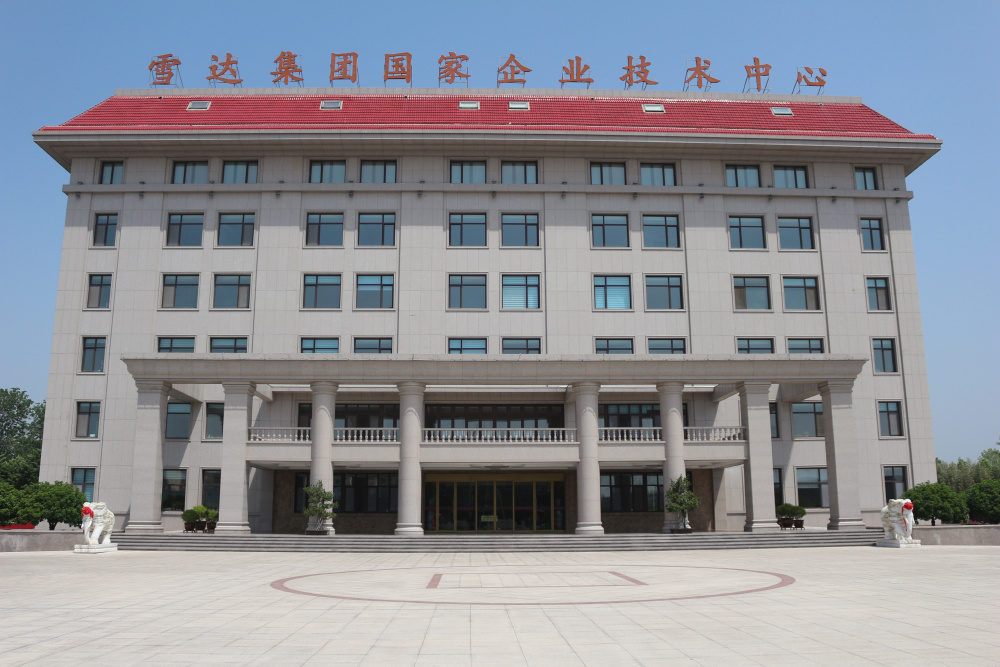
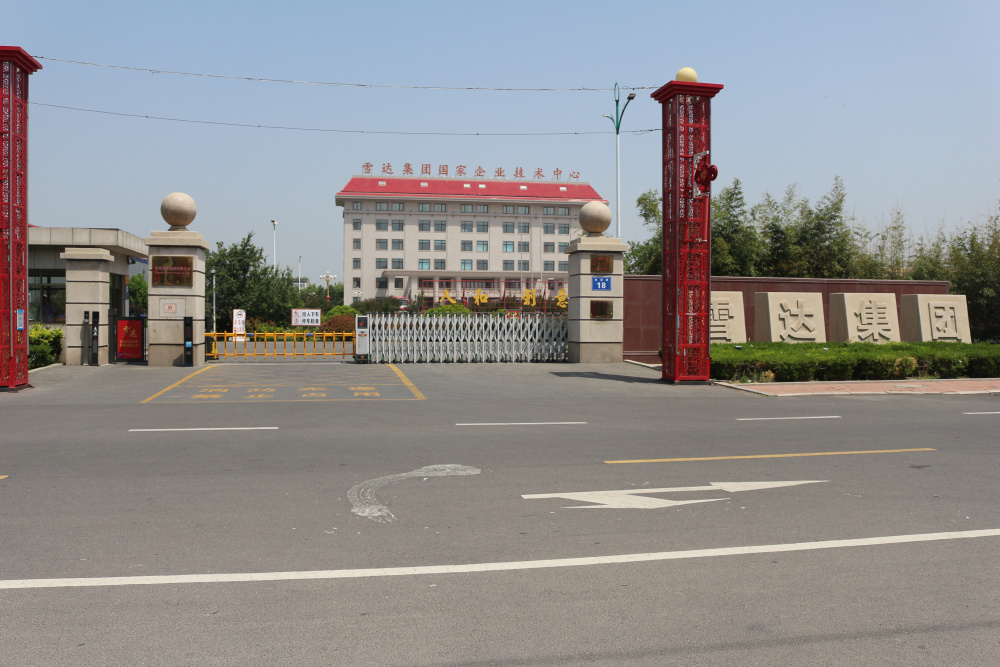
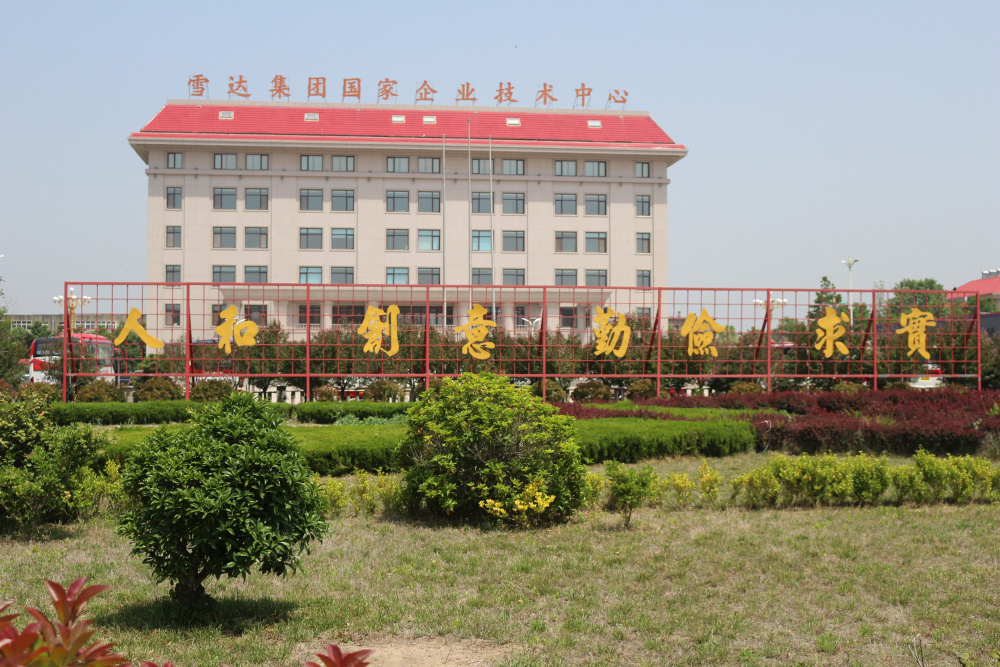
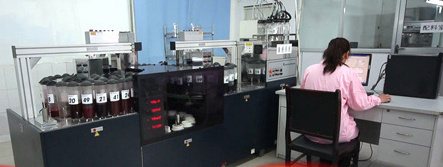
Over the past fifty years since its establishment, Xueda Group has remained deeply committed to the knitted apparel industry, making it one of the longest-standing and most comprehensive players in the sector in terms of vertically integrated, self-operated supply-chain capabilities. With decades of accumulated expertise in knitted apparel, the company boasts robust technical strength, state-of-the-art equipment and production processes, and a host of prestigious R&D platforms, including a National Enterprise Technology Center, a Qingdao Municipal Expert Workstation for the Application and R&D of Novel Fibers, and an Engineering Research Center for the Textile and Apparel Industry. It maintains dedicated departments for technological R&D and innovation, new-material and new-product testing and pilot production, and physicochemical testing and analysis. The group is equipped with advanced automated batching systems and computerized color-matching systems, as well as cutting-edge testing and analytical instruments for formaldehyde content, yarn and fabric strength, colorfastness, and other key performance metrics. It also employs leading CAD/CAM and super-layout systems, along with automated fabric spreading, automatic cutting, modular sewing systems, and hanging-line production lines—all sourced from renowned French, American, Canadian, and domestic brands. Xueda Group possesses strong independent design and product-testing capabilities, particularly excelling in the integrated application of high-tech materials and multi-component fibers.
The Group has established independent weaving and dyeing-and-finishing subsidiaries. The weaving subsidiary is equipped with a wide array of world-leading weaving production equipment, including machines from Japan’s Fukuen, Germany’s Dörries, Singapore’s Pan-Ma, Taiwan’s Chien-Hua and Fu-Yang, as well as numerous other advanced models; in addition, it operates more than 200 units of various types of flat-bed knitting machines, ribbing machines, jacquard machines, cotton-blend machines, spandex machines, three-thread sweatshirt machines, collar-ribbing machines, single- and double-sided circular knitting machines, multi-functional circular knitting machines, and electric flat-bed knitting machines, enabling an annual output of approximately 8,000 metric tons of knitted fabrics. The dyeing-and-finishing subsidiary boasts over 200 sets of state-of-the-art finishing equipment, including Hong Kong Lixin dyeing machines, Italian MCS dyeing machines, and advanced post-finishing machinery manufactured in Germany, Switzerland, and Italy, along with internationally advanced rotary screen printing machines and flat-screen printing machines. Its facilities encompass a full range of bleaching and dyeing equipment, such as ambient-temperature overflow dyeing machines, high-temperature high-pressure dyeing machines, oxygen-bleaching production lines, and rope-style pad dyeing machines; various washing machines and rotary screen dryers, vertical dryers, and drum dryers; as well as functional finishing equipment like heat-setting machines, stenter–setting combined machines, widening machines, pre-shrinking machines, napping machines, calendering machines, sanding machines, and shearing machines. These capabilities allow the subsidiary to directly bleach, dye, and finish yarns, fabrics, and finished garments, with an annual production capacity exceeding 6,000 metric tons.
The Group operates four garment manufacturing subsidiaries in China, with a network of more than 50 supporting and collaborative apparel processing plants, employing over 10,000 workers. It is equipped with three state-of-the-art 20-head multi-functional computerized embroidery machines, more than 40 printing production lines, over 4,000 pieces of cutting and garment-making equipment, and multiple imported advanced needle-detection systems. The Group has an annual production capacity of 50 million pieces/sets of mid- to high-end knitted inner and outerwear.
In accordance with the requirements of the ISO 9001 international quality management system, the Group has established a comprehensive and fully integrated quality management system that provides end-to-end monitoring and control over the entire production process—from raw material receipt and process specification development to product shipment. In addition, the Group operates an independent inspection center, separate from all subsidiaries and manufacturing plants, which conducts thorough inspections of products awaiting shipment from the customer’s perspective, thereby ensuring that every item leaving the factory is a conforming product.
From weaving and dyeing to garment manufacturing, from raw material receipt to finished-product shipment, and from RFID to digital packing systems, as well as from ERP to ETS, every process at each company within the group has been integrated with state-of-the-art information-based control systems. These systems directly collect data at the production line, transmit and share it in real time via network with relevant departments such as production planning, engineering, quality assurance, inspection, and warehousing, as well as with customers, thereby providing timely feedback on operational performance and enabling prompt early warnings. This robust information infrastructure delivers effective support for rapid, efficient, and high-level decision-making and management, ensuring that the company’s production efficiency and on-time delivery capabilities remain among the industry’s best, while also safeguarding the company’s reputation and product quality and protecting customer interests.
Xueda Group
Brand Strategy

Xueda Group has consistently placed great emphasis on brand building and development, regarding branding as the most critical factor in enhancing the company’s core competitiveness and ensuring its sustained, healthy, and rapid growth. In the 1980s, the company registered such brands as “Yuxia,” “Juxia,” “Top Ten,” and “Xiaobo,” achieving nationwide recognition during the planned-economy era. In 1991, Xueda officially registered the “Xueda” brand, and in 2001 it secured trademark registration for Xueda in France—the global capital of fashion—and also established Xueda International (Hong Kong) Co., Ltd. in Hong Kong, dedicated to the internationalization of its brand. As a result, Xueda ranks among the leaders in the history of brand development within China’s knitwear industry.
To comprehensively promote and implement the “One Brand per Division” brand strategy, Xueda has successively registered its own brands, including Beikela, Yingben, Beimisi, Milian’en, and Kalunqi. In addition, the company has established specialized subsidiaries for both offline and online brand expansion, thereby building a robust portfolio of Xueda’s proprietary brands. Concurrently, Xueda has entered into strategic cooperation agreements with internationally renowned brands such as “Strawman,” “Teddy Bear,” and “NICI,” leveraging co-branding initiatives to accelerate the promotion and development of its own brands.
Guided by the Xueda Dream of “Building a Century-Old Xueda and Establishing a World-Class Brand,” Xueda employees have fully leveraged their technological innovation strengths in implementing the brand development strategy, with the goal of “developing and applying new materials and continuously launching new products.” They have actively integrated into the development paradigm of “domestic circulation as the mainstay, with domestic and international dual circulation,” simultaneously expanding both domestic and overseas markets, intensifying efforts on both fronts, continuously enhancing the market competitiveness of the company’s products, cultivating flagship products with significant influence, building an internationally renowned independent brand, and shaping a positive corporate image. Xueda has successively been honored as one of the “Top Ten Promising Brands” and one of the “Top Ten Competitive Brands” in Shandong Province’s apparel industry, and has received key recognition and support as a leading textile and apparel brand, a Shandong Provincial Famous Brand, a Shandong Provincial Well-Known Trademark, and a unit awarded the national exemption from product quality inspections. In 2012, it was recognized by the State Administration for Industry and Commerce as a China Well-Known Trademark. Xueda products, renowned for their outstanding quality, are highly favored by consumers at home and abroad, and have established a robust market network spanning numerous provinces and cities across China as well as Japan, Southeast Asia, North America, Western Europe, and other regions.





Interpretation and Design Explanation of the Xueda Group Corporate Logo:
The Xueda logo is designed by transforming the two “D”s—the initial letters of the pinyin for the character “Da” in the Xueda Group—into dynamic, trend-based lines.
Chinese Red: The color of the national flag, it is the most iconic hue of China’s national identity, symbolizing passion, exuberance, and vitality—while embodying the ideals of harmony and a beautiful life. As a color that signifies auspiciousness and good fortune, red enhances the approachability of a company’s public image and delivers a powerful visual impact, underscoring the organization’s momentum for upward growth.
Blue: the color that exudes the greatest sense of solemnity and cohesion, symbolizing breadth, inclusiveness, and rationality, while also embodying integrity and reliability. The combination of red and blue creates a visual aesthetic characterized by stability, harmony, and dynamic tension.
1. The interwoven elements form the letter “X,” the initial of the character “Xue” in the Xueda Group name, while also resembling the knit structure of the group’s core apparel business, thereby fully highlighting the industry-specific characteristics of Xueda Group.
2. Two interlocking “D” shapes—one upright, one inverted—resemble two hands firmly clasped above, symbolizing the company’s sincere and passionate collaboration with customers and society, forging close bonds based on integrity and mutual trust. This design also powerfully conveys Xueda Group’s vision of “harmony and integrity, advancing together.”
3. The two interwoven “D”s resemble two fish gently kissing each other, while also evoking the stylized form of the Chinese knot—a symbol of auspiciousness in Chinese culture—thus embodying a beautiful vision of a harmonious society and a peaceful, fulfilling life.
4. The overall design resembles the infinity symbol “∞,” directly and clearly conveying the logo’s symbolism; it symbolizes Xueda Group’s limitless potential for growth.
5. Two interwoven, intertwined Ds form two circular shapes, reminiscent of two suns; meanwhile, the graphic elements extending in four directions on either side serve as the finishing touch of the entire logo, evoking the image of two newly risen moons. Together, these elements create a harmonious composition of sun and moon shining in tandem, symbolizing the company’s radiant growth and prosperity, while also heralding an endless future—a grand, enduring vision that will unfold over the long arc of time.
Xueda Group
Quality System
Over several decades of dedicated exploration, learning, and accumulation in the knitwear industry, Xueda Group has established a standardized and comprehensive quality management system. In 1997, it was the first in the local industry to obtain ISO 9001 international quality management system certification, followed by ISO 14001 environmental management system certification in 2007. The company has consistently adhered to the ISO 9001 quality management standard and the ISO 14001 environmental management standard as the guiding principles for its production and business operations. It has rigorously implemented a three-tier quality control system—covering workshops, individual companies (factories), and the group level—and established stringent, fully integrated quality control and reverse-tracing mechanisms that span the entire process, from raw material receipt and every stage of production to final product shipment. These measures ensure compliance with both national standards and market-specific customer requirements, thereby achieving customer satisfaction and meeting the expectations of discerning consumers.
Xueda Group
Sustainable development
Ride the Wave of Green Transformation and Pursue a Path of Innovative Development
— A Documentary on Qingdao Xueda Group’s Commitment to Energy Conservation, Emission Reduction, and Sustainable Development
The textile and apparel industry is a pillar of China’s national industry and a traditional sector, long holding a vital position in the national economy. It has played a crucial role in stimulating market vitality, expanding exports, and creating employment. However, this large and indispensable industry has also found itself at the center of environmental concerns—particularly regarding dyeing and finishing wastewater—and is often labeled as a “three-high” industry, a major polluter, and a heavy energy consumer, drawing widespread public criticism. The textile and apparel sector now faces unprecedented challenges and opportunities.

Seizing opportunities and rising to challenges: the only path to corporate development.
Against the backdrop of intense public scrutiny facing the textile and apparel industry, the once prevalent business model characterized by high pollution, high emissions, and high energy consumption has clearly become incompatible with the demands of social development. Under mounting environmental pressures, an increasing number of companies are transitioning toward a low-pollution, low-emission, and low-energy-consumption development model through a series of measures, including technological innovation, energy conservation and emission reduction, and clean production. This transformation is not only a response to the times but also a necessity for the enterprises’ own sustainable development. Qingdao XueDa Group Co., Ltd. is a prime example of a large private enterprise that has actively embraced this wave of corporate transformation, vigorously promoting technological innovation and green development. Its remarkable transformation has set an exemplary standard for its peers in the textile and apparel sector and, more broadly, has demonstrated to all enterprises and to society at large the demeanor of a responsible, committed, intelligent, and capable textile and apparel company.
Xueda Group has always placed great emphasis on green production and environmental protection, steadfastly adhering to the principle of “green production, sustainable development, compliance with laws and regulations, and environmental protection first.” It regards “green and low-carbon operations, with environmental protection as the top priority” as a guiding philosophy that must be followed in corporate development, fully integrating this environmental ethos into all production and business activities and making it the company’s code of conduct. For any new projects, the primary consideration is whether they can meet the “green and low-carbon” standards; projects that fail to do so will be categorically rejected, regardless of the potential benefits. As for existing projects already in normal operation, if they cannot meet the “green and low-carbon” requirements, they must immediately cease production for rectification; and even after rectification, if they still fail to comply, they must be phased out without exception, no matter the extent of the economic losses. Under no circumstances shall economic gains be pursued at the expense of the environment.
Technological Innovation: A Catalyst for Corporate Transformation
Innovation is the driving force behind the continuous development and progress of human society and the very soul of an enterprise. Over the years, despite ever-changing market conditions and business environments, Xueda Group has steadfastly pursued a path of innovation. It is precisely because the company places great emphasis on technological innovation in areas such as product R&D and the upgrading of production processes and technologies that it has consistently maintained its core competitiveness and achieved remarkable results.
In new product development and technological innovation, Xueda Group adheres to the overarching strategy of “developing and producing one generation, researching and developing the next, and stockpiling the generation after that.” In terms of fabrics, the company is focusing on multi-component composite materials; in apparel, the emphasis is on health-promoting functionalities. Leveraging its Xueda Technology Center and expert workstations as technology incubators, the group has established industry–university–research collaboration partnerships with renowned research institutions, universities, and multinational corporations, including the Shandong Academy of Textile Sciences, Sichuan University, and Qingdao University, continuously fostering new industries and creating additional drivers of economic growth. To date, Xueda has been awarded more than 50 national patents and four State Key New Products, and has received over 100 honors, including awards from the China National Textile Industry Association, Shandong Province, and Qingdao City for scientific and technological innovation. Furthermore, the Xueda Technology Center has been recognized by five national ministries and commissions, including the National Development and Reform Commission, as a National Enterprise Technology Center.
While placing great emphasis on the green transformation of its products, Xueda Group also attaches considerable importance to clean production. The company is committed to introducing advanced production equipment that is highly automated and intelligent, energy-efficient, and highly productive; continuously researching, developing, and optimizing production processes across weaving, dyeing and finishing, and garment manufacturing; and promptly retiring outdated production capacity. These efforts have resulted in reduced resource consumption, lower costs, and improved efficiency. In addition, the company actively aligns its operations with national and international standards, inviting representatives from national environmental protection authorities, environmental consulting firms, and relevant environmental experts to provide guidance. It has comprehensively implemented clean production practices and pursued certification under environmental management systems, successfully passing the clean production audit in 2006 and obtaining ISO 14001 environmental management system certification in June 2007.
Reduce pollution and eliminate enterprises’ concerns about development.
To further improve the company’s overall environmental performance and reduce pollutant emissions, Xueda Group has comprehensively implemented clean and civilized production initiatives since March 2012, allocating dedicated annual funds to environmental improvement projects aimed at lowering the enterprise’s pollutant discharge.
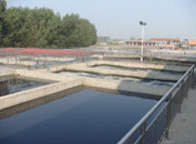
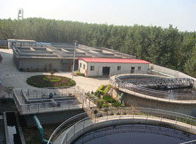
As a textile and apparel enterprise, dyeing and finishing wastewater is the “number one enemy” in our pollution reduction efforts. Xueda Group places great emphasis on the treatment of such wastewater: in 2007, we made a one-time investment of over RMB 6 million to build a new wastewater treatment plant, introducing the most advanced domestic wastewater treatment technologies and equipment at the time. Through technological innovation and facility upgrades, we have fully transitioned to more advanced, environmentally friendly natural gas–powered systems, decommissioned all coal- and oil-fired boilers, and implemented closed-loop recycling of cooling water used in the dyeing process. In 2022, we further introduced state-of-the-art heat recovery equipment, achieving the goal of “using waste to treat waste” and delivering win-win results in both pollution control and emission reduction. This enables the reuse of dyeing and finishing wastewater, thereby reducing operating costs.
The higher a company’s public reputation—especially for a brand-name enterprise—the greater its commitment to corporate social responsibility. Xueda Group’s transformation toward a sustainable development model is an ongoing journey of relentless innovation and continuous improvement; it reflects the Xueda team’s willingness to shoulder significant responsibilities in the broader tide of human societal progress and their proactive choice to pioneer new models. Above all, this transformation serves as the driving force behind Xueda Group’s sustained, healthy growth.
No. 33, Hongxing Road, Nanquan Town, Jimo City, Qingdao





Official website QR code