
Xueda Group is a large, diversified enterprise conglomerate primarily engaged in the production of mid- to high-end knitted apparel, with operations spanning knitted garment manufacturing, international trade, automotive maintenance, financial investment, and public utilities.

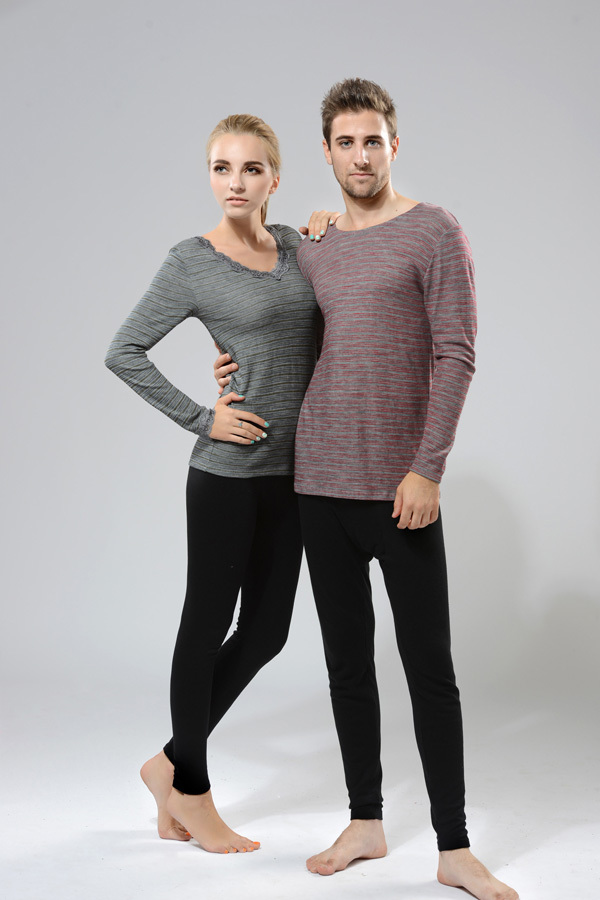
Carbon Brushed Men's and Women's Suit
Undergarments refer to clothing worn directly next to the skin, including vests, undershirts, shorts, bras, and the like. Underwear is defined as garments worn beneath other layers of clothing; it typically comes into direct contact with the skin and has become an indispensable part of modern attire. Underwear serves functions such as absorbing sweat, providing body shaping and support, retaining warmth, and protecting the body from external contaminants; at times, it is even regarded as a symbol of sexuality. Certain types of underwear also carry religious connotations. During the Han dynasty, undergarments were known as “heart clothes”; in the Two Jin period, they were called “two flaps”; in the Tang dynasty, “inner middle and undergarments”; in the Song dynasty, “chest wraps”; in the Ming dynasty, “skirt braces” (main waist); and in the Qing dynasty, “belly guards.”
Product Category:
Keywords:
XueDa
Category 1: Pure cotton underwear. The most traditional type of single-layer undergarment, soft and breathable; however, due to its thin fabric, it is best suited for spring and autumn.
Category 2: Fibrous thermal underwear. These garments typically use fabrics such as cotton, wool, acrylic, and polyester, with layers of padding made from materials like cotton, wool, and camel hair. Their advantages include good breathability and moisture-wicking properties; their disadvantages are that they can make the wearer appear bulky and heavy.
Category 3: Space-cotton thermal underwear. The fabric is made from cotton, wool, silk, synthetic fibers, and other materials, with a metallic film coated on the inner padding layer. Its advantages are good warmth retention and radiation shielding; its disadvantages are poor breathability and moisture-wicking, and it produces a rustling sound when worn.
Category Four: Thermal underwear with an ICCP-layered interlining. This type employs fabrics such as cotton, wool, silk, and Lycra, while the ICCP material in the interlayer has evolved from a non-porous structure to a porous one and eventually to a mesh-like film. The bonding between the outer fabric and the interlayer has also progressed from adhesive bonding to composite fabrication using specialized processes.
Category 5: Comfortable, Health-Promoting Thermal Underwear. These products claim to contain far-infrared fibers and more than 20 trace elements, with far-infrared rays purportedly capable of energy conversion within the body to help regulate immune function.
Category Six: Silk Thermal Underwear. Traditional silk thermal underwear—commonly known as “silk quilted jackets”—is filled with silk and boasts eco-friendly, health-conscious qualities, along with being lightweight, soft, smooth to the touch, and highly insulating. It also features excellent temperature-regulating, breathable, and moisture-permeable properties, ensuring a close-fitting, warm, light, and comfortable wearing experience; moreover, these silk quilted jackets are mite-resistant, antibacterial, and mold-proof. Newly developed silk thermal underwear, created through improved manufacturing processes, builds on the traditional method and adds six key advantages: enhanced aesthetics, a wider variety of styles, washability, no need for reupholstering, and even greater warmth.
Previous article:
Next article:
Submit your request
Please complete the form below. Our staff will contact you within 24 hours and resolve your issue as soon as possible.
Product Recommendations
Since its establishment, Xueda Group has consistently pursued product innovation and scientific development, dedicating itself to the R&D and production of knitted apparel and fabrics. In 1997, it was the first in the industry to obtain ISO 9001 certification for its quality management system; in 2007, it achieved ISO 14001 certification for its environmental management system; and in 2017, it secured certification for its intellectual property management system.

No. 33, Hongxing Road, Nanquan Town, Jimo City, Qingdao





Official website QR code